Buying a new RV is exciting. You finally have your own space on the road, a place to relax after a long drive, and the freedom to travel wherever the road takes you.
But there is one part of your RV that can start showing wear much sooner than you might expect: the seats.
RV seats experience a surprising amount of abuse. They are exposed to sunlight through the windshield and windows, frequent use, food and drink spills, pets, dirt, moisture, and the constant movement that comes with traveling. Even if your seats are brand new, protecting them from the beginning can help keep them looking better for years.
Fortunately, you don’t have to spend a fortune to protect your RV upholstery. There are several options available, ranging from a simple layer of protection to professionally made custom-fit RV seat covers.
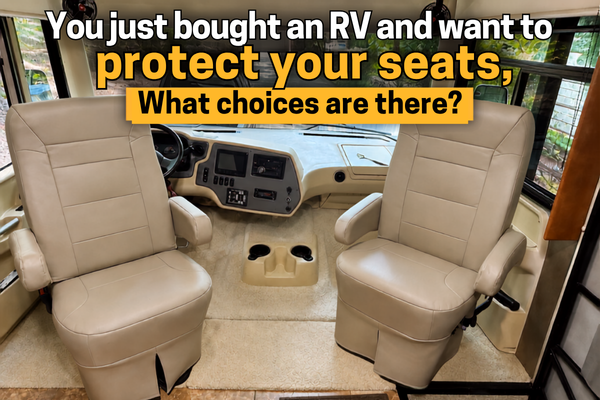
So, what choices do you have if you just bought an RV and want to protect the seats?
Let’s take a look.
1. Custom-Fit Seat Covers

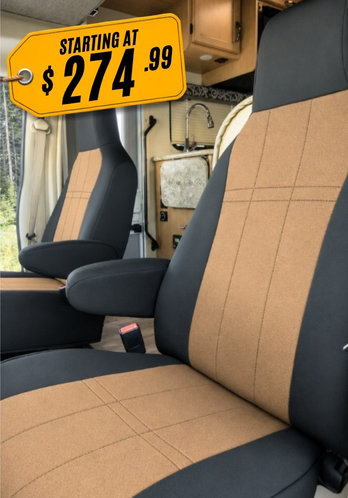
If your goal is to protect your seats for the long term, custom-fit seat covers are one of the most comprehensive options available.
Unlike generic covers, custom covers are made specifically for the dimensions and configuration of your seats.
That means they can account for things such as headrests, armrests, seat contours, recliners, separate cushions, and other features that make RV seating different from one vehicle to another.
Tailored Design
The biggest advantage of custom-fit seat covers is right in the name: they are designed to fit your seats.
Instead of trying to force a universal cover over a seat that wasn’t designed for it, a custom cover can follow the shape of the original upholstery.
This can be especially important in RVs because there isn’t one standard RV seat design.
Captain’s chairs, passenger seats, sofas, dinettes, recliners, and other seating configurations can all have different shapes and dimensions.
A properly designed cover can provide protection while still allowing the seat’s original functions to work properly.
For example, a captain’s chair may need to rotate, recline, or move forward and backward. A good seat cover should accommodate those movements rather than simply sitting loosely over the entire seat.
Sleek Look
Protection doesn’t have to make your RV look like it is covered in temporary furniture protectors.
Custom-fit covers can provide a much cleaner appearance because they are designed around the shape of the original seat.
You can also choose from different materials, colors, and styles depending on the look you want inside your RV.
This makes custom covers particularly appealing to RV owners who want to protect their original upholstery without sacrificing the appearance of their interior.
You can even use seat covers as an opportunity to update the appearance of an older RV.
Durable Materials
Another major benefit is the variety of materials available.
Depending on your needs, you can choose materials designed for different types of use.
For example, some RV owners may prioritize:
- Water resistance
- Easy cleaning
- Durability
- Comfort
- Pet-hair resistance
- UV resistance
- A more luxurious appearance
Neosupreme, Cordura, imitation leather, sheepskin, saddle blanket, and cloth-style materials can all provide different combinations of comfort, durability, and practicality.
The important thing is to choose a material based on how you actually use your RV.
If you regularly travel with pets, your priorities may be different from someone who mainly takes occasional weekend trips.
2. Universal Seat Covers

Custom-fit covers aren’t the only option.
If you’re looking for something less expensive or you don’t want to commit to a permanent-looking solution, universal seat covers may be worth considering.
Universal covers are designed to fit a range of different seat shapes and sizes rather than one specific seat.
Budget-Friendly
One of the biggest advantages is price.
Because universal covers are produced to fit many different vehicles and seats, they can often cost less than custom-made covers.
For a new RV owner who wants basic protection without making a larger investment, this can be an attractive option.
They’re particularly useful if you’re not sure how heavily you’ll use your RV yet.
Easy Installation
Universal covers are generally designed to be installed without extensive modification.
Depending on the design, they may use straps, elastic, buckles, or other attachment methods to hold the cover in place.
This makes them convenient for people who want to put protection on their seats without having to have anything professionally installed.
You can often install them yourself in a relatively short amount of time.
Simple Removal
Universal covers are also easy to take off.
That’s useful if you want to remove them periodically for cleaning or if you want to return the RV to its original appearance.
They’re also a good temporary solution if you are planning to eventually purchase custom-fit covers but aren’t ready to do so yet.
The tradeoff is fit.
Because a universal cover has to accommodate many different seat shapes, it may not fit as tightly or look as integrated as a custom-fit cover.
3. Pet Seat Protectors

If you travel with a dog or cat, your seats have another potential source of wear to deal with: your pet.
Claws, muddy paws, shedding, drool, and occasional accidents can all take a toll on RV upholstery.
Pet seat protectors are designed specifically to address these problems.
Claw Defense
Pet claws can scratch or puncture some upholstery materials, particularly when a dog is repeatedly jumping onto the seat or trying to maintain its balance while the RV is moving.
A protective layer between your pet and the original upholstery can reduce direct contact with the seat.
This can be especially helpful for the seats your pet uses most frequently.
Hammock Style
Hammock-style protectors are another popular option.
Rather than covering only the seat cushion, a hammock-style protector can connect the front and rear headrests or other attachment points, creating a suspended barrier.
This can help keep your pet contained within a particular area and prevent them from falling into the footwell.
It also creates a larger protected surface, which can be useful if your dog moves around while you’re traveling.
For RV owners who regularly bring pets along, a hammock-style protector can provide a convenient combination of seat protection and containment.
Waterproof Backing
Some pet protectors also feature waterproof or water-resistant backing.
This is particularly useful for dealing with wet paws, spills, drool, or accidents.
The backing helps prevent moisture from passing through the protector and reaching the original upholstery underneath.
Keep in mind that “waterproof” doesn’t necessarily mean you can leave a large amount of liquid sitting on the protector indefinitely. Seams, attachment points, and uncovered areas can still allow moisture through.
Still, a waterproof-backed protector can provide an important extra layer of defense for pet owners.
4. Protective Blankets and Towels

Sometimes you don’t need anything complicated.
A blanket or towel can provide surprisingly useful protection, especially when you’re looking for a quick and inexpensive solution.
Quick Fix
Have guests coming over? Taking the dog on a muddy hike? Moving something through the RV?
Throwing a blanket or towel over the seat takes only a few seconds.
It can create a barrier between the upholstery and dirt, moisture, food, or other potential messes.
This makes blankets and towels particularly useful when something unexpected happens.
High Washability
Another major advantage is how easy they are to clean.
If the blanket gets dirty, you can simply remove it and wash it.
That’s much easier than trying to clean a stain directly from the original RV upholstery.
Having a few washable blankets or towels dedicated to RV use can therefore be a practical part of your cleaning and maintenance routine.
Temporary Use
The biggest drawback is that blankets and towels aren’t designed to be permanent seat covers.
They can shift while you’re sitting on them, bunch up, fall off the seat, or interfere with seat controls.
They also don’t necessarily protect every part of the upholstery.
For that reason, blankets and towels are best thought of as temporary or supplemental protection, rather than a complete long-term solution.
5. A Thin Layer of Protection

If your RV is brand new and your main goal is simply to prevent accidental damage, you don’t necessarily need to install a full seat cover immediately.
Sometimes, a thin protective layer is enough.
The idea is simple: put something between the people, pets, and everyday messes in your RV and the original upholstery.
A thin layer can help protect against minor spills, dirt, food crumbs, and other everyday messes. It can also be useful if you are still deciding what type of permanent seat protection you want.
Painters Tape
Believe it or not, painters tape can have a very specific use when you’re trying to protect brand-new upholstery during an RV project.
If you are painting, remodeling, installing flooring, working on cabinets, or making other modifications inside your RV, you may want to temporarily cover or protect nearby seats.
Painters tape can be used to hold protective plastic, paper, or other coverings in place around the work area.
However, don’t stick painters tape directly to your upholstery unless the manufacturer specifically says it is safe.
Adhesives can leave residue, pull fibers, or potentially damage certain upholstery materials. Instead, use tape to secure a protective covering to another surface whenever possible.
This isn’t really a long-term seat-protection solution, but it can be useful during renovations or maintenance.
6. Conditioners and UV Sprays

Protecting your RV seats doesn’t always mean putting another material over them.
Depending on the type of upholstery you have, proper cleaning and conditioning can also help maintain the material.
This is especially important because RV interiors can receive significant sunlight.
Your windshield and windows allow sunlight to reach the dashboard, seats, and other interior surfaces for hours at a time.
Fading Prevention
UV exposure can contribute to fading and deterioration of certain upholstery materials.
Using a UV-protective product that is specifically designed for your upholstery can help reduce the effects of sun exposure.
However, not every product is appropriate for every material.
Always check the manufacturer’s recommendations before applying a conditioner or UV protectant.
A product designed for leather, for example, may not be appropriate for cloth, Neosupreme, or other synthetic materials.
And don’t assume that more product means more protection. Applying the wrong chemical can actually cause damage.
Stain Repulsion
Some fabric protectants are designed to make it more difficult for liquids and stains to penetrate the material.
This can give you more time to clean up a spill before it becomes a permanent stain.
For an RV, that extra time can be valuable.
A coffee spill that happens while you’re parked at a campground is much easier to deal with if the liquid stays near the surface instead of immediately soaking into the upholstery.
Material Health
Regular cleaning and using appropriate maintenance products can help keep upholstery looking and feeling better.
But there is an important distinction between protecting upholstery and coating it with chemicals.
Use products specifically recommended for your seat material, follow the directions, and test them on an inconspicuous area first.
For some upholstery, simple regular cleaning may be more appropriate than applying a conditioner.
Which RV Seat Protection Option Is Right for You?

There isn’t one solution that works for every RV owner.
The best choice depends on how you use your RV, how much protection you need, and how much you’re willing to spend.
For occasional use, blankets, towels, or universal covers may be perfectly adequate.
If you regularly travel with pets, adding a pet protector can make sense.
If you’re doing work inside the RV, temporary coverings can prevent accidental damage.
But if your goal is to protect your original seats for years while maintaining a clean, finished appearance, custom-fit seat covers are the most complete solution.
Protect Your Seats Before They Need Protecting
One of the easiest mistakes to make with a new RV is waiting until the seats are already damaged before doing something about them.
Once upholstery has faded, cracked, stained, scratched, or started peeling, protecting it doesn’t undo the damage.
That’s why it’s worth thinking about seat protection before your first major road trip.
You don’t necessarily have to choose the most expensive option. Even a simple blanket can help prevent an unexpected spill from reaching your upholstery.
But if you know you’ll be spending a lot of time on the road, traveling with pets, or simply want to keep your RV looking as close to new as possible, investing in dedicated seat protection can pay off over time.
Your RV seats are used every time you drive, relax, eat, or spend time inside your RV. Protecting them from day one can help preserve both the appearance and value of your interior for years to come.